
India has opposed the International Monetary Fund's (IMF) proposal to extend fresh loans of USD 2.3 billion to Pakistan, citing concerns that the funds could be misused for financing state-sponsored cross-border terrorism. India abstained from voting at the IMF meeting, expressing concerns about Pakistan's track record and the possibility of debt financing being misused for terrorism. The IMF took note of India's statements and its abstention from the vote. India's opposition comes at a time when military conflict between India and Pakistan has intensified following a terrorist attack in Kashmir.

For India, much is at stake: Crucial energy supplies traversing the Strait of Hormuz, the fate of its 10 million citizens living and working in West Asia -- who send generous remittances home -- and its major trade links with the region.

Prashant Kishor's Jan Suraaj Party reiterated its promise to scrap the liquor ban in Bihar if elected, planning to use the revenue to secure loans from international financial institutions.

India should refrain from playing cricket with Pakistan in view of the ongoing tension with the neighbouring country, Arvind Sawant (SS-UBT) said on Monday in the Lok Sabha.

About 85 per cent of the digital payment transactions take place through UPI in India, and the country can be a case study in inclusive, secure, and scalable Digital Public Platforms (DPPs), Reserve Bank Governor Sanjay Malhotra has said. He was speaking at a "High-Level Dialogue on Forging Economic Resilience through Digital Public Platforms" organised by RBI on the sidelines of the Annual Meetings of the World Bank and International Monetary Fund in Washington, DC on Tuesday.

The fund said oil prices are still at double the levels recorded in end-2006, even after the 40 per cent fall in prices from the peak they reached in July this year. Food prices too are still above end-2006 levels. Because of this, fuel importing low-income countries will see their import bill increase by 3.2 per cent of their GDP, while food importing countries will spend additional amount equivalent to 0.8 per cent of GDP on food.

The operator's liability in the case of an incident is limited to 3,000 crore for reactors with thermal power above 3,600 Megawatt; 1,500 crore for reactors with thermal power between 1,500 Mw and 3,600 Mw; 750 crore for reactors with thermal power between 750 Mw and 1,500 Mw; 300 crore for reactors with thermal power between 150 Mw and 750 Mw; and 100 crore for reactors having thermal power up to 150 Mw, fuel cycle facilities other than spent fuel reprocessing plants and transportation of nuclear materials.

Pakistan's Ministry of Economic Affairs X account was hacked and a fake appeal was posted, calling for more international loans to help defuse tensions with India following the Pahalgam terror attack. The post urged the international community to help de-escalate the situation and requested more loans to address "heavy losses" caused by the tensions. The hacking incident occurred during a crucial meeting of the IMF executive board to decide on the next installment of a USD 7 billion loan for Pakistan.

The RBI has already hiked interest rates 12 times since March, 2010, to control inflation, which is currently hovering near the double-digit mark.

Delhi Police have dismantled a cyber fraud syndicate with connections to foreign handlers, arresting three individuals, including a bank employee. The investigation revealed the use of mule accounts, social media platforms, and cryptocurrency for illicit transactions.

The Indian economy is likely to grow at 7.4 per cent in 2025-26, up from 6.5 per cent in the previous fiscal, mainly on account of better performance of manufacturing and services sectors, as per the government data released on Wednesday.
'Maybe he was wrong, but they believed he genuinely meant what he said.'

India has managed high government debt-to-GDP, a slowing domestic revenue engine, lower household savings and a more hostile geopolitical environment separately in the past. But together, they threaten to undo the growth narrative on which today's optimism rests, warns Debashis Basu.

The Indian government has introduced a bill to overhaul the civil nuclear sector, allowing private participation and establishing a new liability regime. The SHANTI Bill, 2025, aims to repeal existing acts and address industry concerns.

Pakistan on Friday said that the X account of its ministry of economic affairs was hacked and an appeal was posted on it for more international loans to meet the 'heavy losses' caused by the current tensions with India.

The Indian government has expressed its disagreement with the IMF staff's 'baseline' assumption that the 50 per cent US tariffs on its goods exports 'would remain in place indefinitely', based on which the staff pegged the country's GDP growth at 6.6 per cent this year, and pared its 2026-27 projection by 20 basis points to 6.2 per cent.
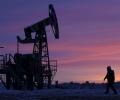
The Reserve Bank of India (RBI) has projected that crude oil prices will average USD 85 per barrel and the rupee will weaken to 94 against the dollar by FY27, according to its bi-annual Monetary Policy report.

India had vehemently opposed Asian Development Bank's decision to grant $800 million loan to Pakistan saying the fund could be misused for increasing expenditure on its military, government sources said.

The International Monetary Fund (IMF) has said the tightening of monetary policy by India is an 'appropriate' step, as the country is faced with high inflation and needs to consolidate the fiscal measures initiated during the slowdown.
India, the world's fourth largest economy, is set to maintain the 'goldilocks' phase with tailwinds of good growth, low inflation and robust banking performance as well as reform initiatives poised to sustain the economic pace witnessed during 2025.

The disbursement of the second tranche comes on a day when the International Monetary Fund is holding virtual discussions on Pakistan's upcoming budget, as the visit of its mission to Islamabad was delayed due to security concerns in the region.
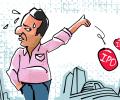
India's equity markets may have expanded rapidly, but initial public offerings (IPOs) are increasingly becoming exit vehicles for early investors rather than as engines for raising long-term capital, a shift that undermines the spirit of public markets, Chief Economic Advisor V Anantha Nageswaran warned on Monday at a CII event.

India's new national accounts will leverage new data sources and surveys to enhance the measurement of the country's informal economy, and introduce double deflation methods across sectors, replacing the current system that relies on a single deflation mechanism in Gross Domestic Product (GDP) calculations.

"We are contributing about 18 per cent, which is more than the US where the contribution is expected to be much less -- about 11 per cent or something. We are doing very well and we will continue to improve further," RBI governor Sanjay Malhotra said, replying to a question on Trump's recent comments.

'When there is such an elaborate and a strong process, one would have expected anyone to either place the issues so that they can be addressed or go to the regulator and probably tell them rather than creating a kind of uncertainty for the stakeholders.

The best way for India to prepare is by preserving and strengthening the RBI's hard-won credibility, point out Rajeswari Sengupta and Vaishali Garga.

India will oppose the World Bank funding to Pakistan next month, arguing that Islamabad has used such funds in the past to procure arms and ammunitions. India previously lobbied against the IMF extending a USD 2.3 billion assistance to Pakistan earlier this month, presenting evidence of Pakistan's misuse of funds for military purposes. India feels that Pakistan has failed to act on terror emanating from its territory and has been diverting funds from multilateral agencies to buy arms and ammunition.

The Reserve Bank of India (RBI) does not target any price level on the rupee, Governor Sanjay Malhotra reiterated at an International Monetary Fund and World Bank event on Wednesday.

The International Monetary Fund (IMF) has said its executive board granted $1 billion in assistance to Pakistan this month after finding out that the country met all conditions and targets for it.

'Only four or five original companies remain; the rest have been replaced every decade as sectors evolve or leadership shifts.' 'Companies that fail to adapt -- like many textile mills from the 1970s and shipping firms from the 1980s -- disappear.' 'Benchmark indices reward those who reinvent themselves in line with economic demands.'

Fitch Ratings on Wednesday raised India's GDP growth forecast to 6.9 per cent for current fiscal year, from 6.5 per cent earlier, citing strong June quarter growth and domestic consumption-led demand.

In an unexpected move, the government has terminated services of K V Subramanian as the executive director at the International Monetary Fund (IMF) six months ahead of his three-year tenure. The move comes days before the IMF executive board is to consider financial aid for debt-ridden Pakistan.
Industrial countries cannot at this point wash their hands off developing economises and say we will do what we need to, and you do the adjustment you need to, says RBI Governor.

'The danger is that when the music stops, the fall will be sudden, faster, and deeper than anyone expects,' warns Debashis Basu.
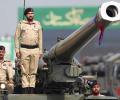
India has decided to submit a dossier at the upcoming Financial Action Task Force (FATF) meeting, calling for Pakistan to be placed back on the grey list of the global money laundering and terrorist financing watchdog.

A neutral monetary policy stance, heavy government borrowing, and issuers adjusting to a higher-for-longer yield environment have set the stage for a largely stable corporate bond market in 2026.
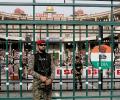
India registered its protest at the board of IMF, which met on Friday to review the EFF lending programme for Pakistan.

Only bona fide victims would be compensated by banks within five days of receiving the complaint.

'It will increase the contribution to gratuity, which is something the employer has to give.'

Re-entry into the list could have far-reaching consequences for Pakistan, including diminished foreign investment, increased borrowing costs, and tighter scrutiny from global financial institutions.
